Leticia Vandemeersche

System-level organisational analyst
I work with organisations where pressure, responsibility and expectations concentrate around a small number of critical roles.

My focus is not on individuals in isolation, but on how organisations structurally interpret performance,
distribute responsibility and absorb pressure over time.

I look at people the way I look at systems:
by observing patterns, dependencies and friction points
that quietly shape outcomes long before they become visible.

OIDA comes from Ancient Greek and means: I have seen, therefore I know.
It reflects my way of working: careful observation first, interpretation second, and only then deliberate action.

This perspective has informed strategic conversations,
internal analyses and published work
on why organisations often misread their most critical contributors.

My work typically takes place alongside executive teams and senior leaders, in contexts where clarity, continuity and discretion matter.
Published work

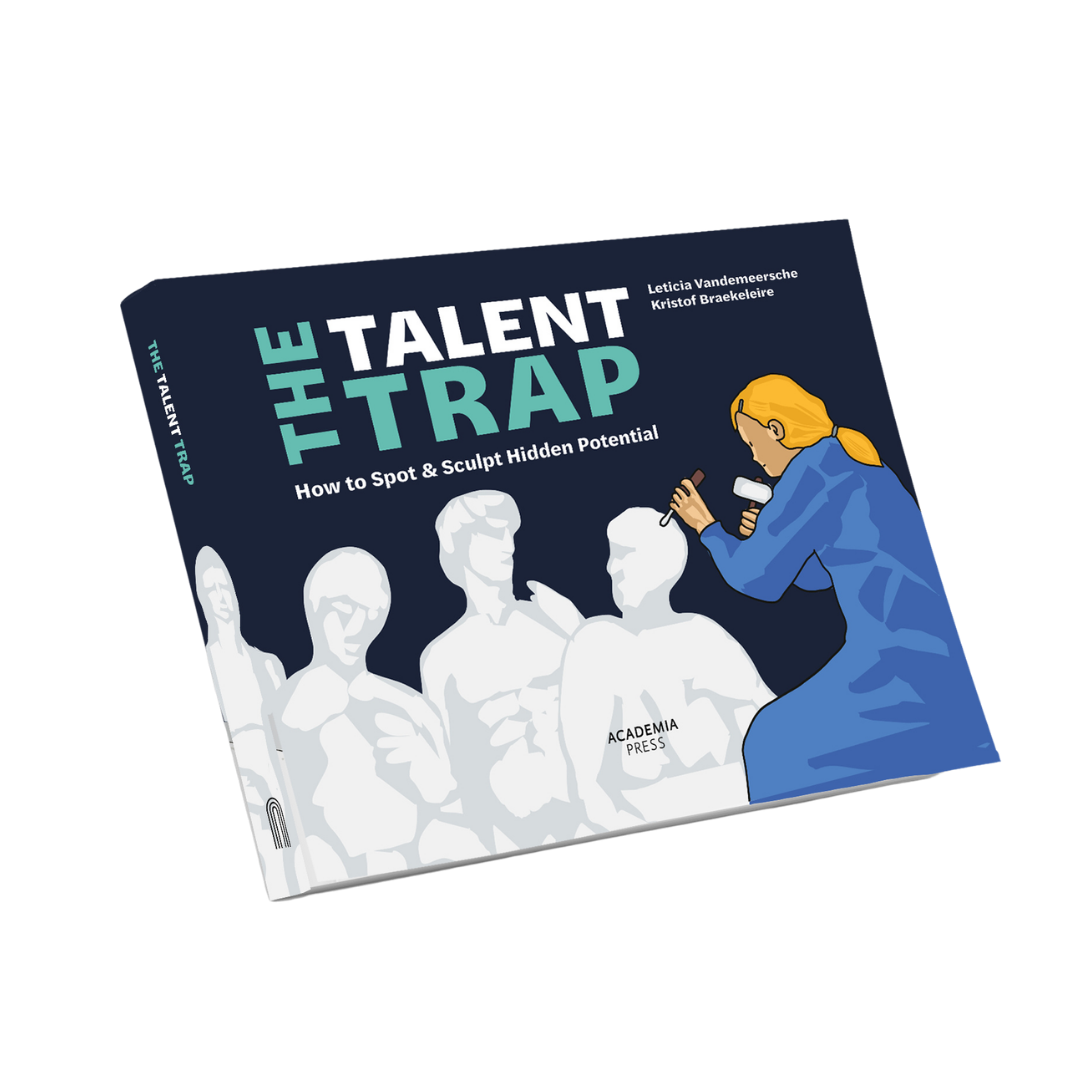
THE TALENT TRAP

The Talent Trap examines why organisations often struggle
to retain their strongest contributors — not because of a lack of talent, but because subtle misalignments in roles, autonomy, challenge and organisational context remain unnoticed.

The book includes a practical manual (PACE) for leaders, offering a structured way to assess where the system unintentionally limits or exhausts key figures.

The manual does not prescribe solutions, but helps leaders identify where adjustments are needed to retain momentum, continuity and responsibility over time.
Read selected insights from the book
An analytical compass

Four principles that guide how I read organisations under pressure

1. Autonomy
When roles lack real decision latitude, pressure accumulates silently.
Autonomy is not about freedom, but about where decisions are genuinely allowed to sit and where they are not.

2. Responsibility
Organisations often confuse accountability with responsibility.
I look at how responsibility is absorbed, avoided or informally carried, and how this shapes behaviour long before it appears in governance structures.

3. Action
Insight without movement increases friction.
Analysis must translate into clear, timely adjustments otherwise pressure simply shifts elsewhere in the system.

4. Sustainability
Growth that ignores limits is short-lived.
I focus on whether roles, expectations and context are sustainable under real conditions, not just on paper.
oida blog

Stories & insights

Start a strategic conversation

A strategic conversation

When key figures carry disproportionate pressure,
retention becomes a symptom — not the issue.A first conversation starts from how your organisationcurrently absorbs pressure, responsibility and risk.
Thank you! Your submission has been received!
Oops! Something went wrong while sending the form.